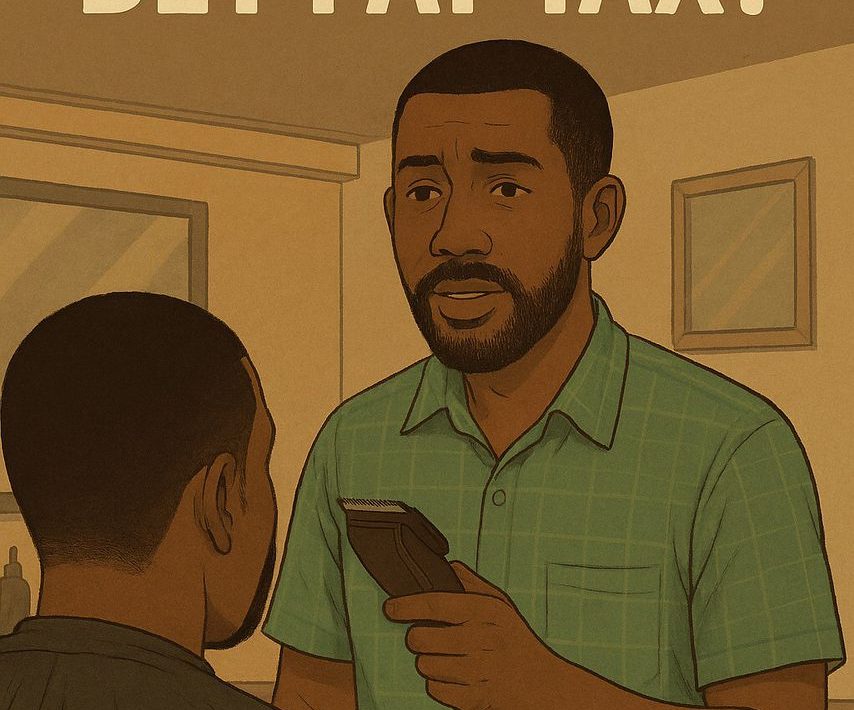
Hmmm! I went to Chinedu’s shop to get a haircut, but before I even sat down, he sighed and said, “Fuel don cost again; I can’t keep charging ₦1,000, today nah ₦1,200.”
I laughed, but he wasn’t joking. He had just bought fuel at a higher price, amids series of government taxes and policies. This, according to him, is making things harder, hence the increment.
Later that day, I stopped by Iya Bashira’s stand for a plate of amala (local delicacy). She shook her head and said, “My brother, fuel is ‘finishing’ us. I use it for the freezer and cooking. I can’t sell at the old price again.”
It was clear that from the barber to the fuel attendant and, to the food vendor, everybody was adjusting prices because of fuel and taxes.
Unbelievably, the beggar on the street feels it, the ₦100 I give doesn’t buy as much food as before. In one way or another, everybody is paying taxes.
As I was eating my amala, all I could hear was Chinedu’s voice in my head, whining as a lot of Nigerians do without taking any action. After I finished, I went back to his shop and told him, “You need to register your shop so you can be entitled to loans and support.”
He agreed, and together we went to see a lawyer. The lawyer explained, “Chinedu, what you are experiencing is part of the new tax law.
The Nigeria Tax Act signed in 2025 and effective January 2026 brings all taxes under one umbrella.
It means every transaction counts, whether it is fuel, food, or haircuts. Even small businesses are expected to use digital platforms to file and pay tax, and the tax office now has stronger powers to enforce compliance.
Whether you register or not, tax touches your life. But if you register, you gain access to loans, grants, and government support.
Compliance protects you.” The lawyer added, “To minimise the effect of the new tax law, keep proper records of your income and expenses, register your business so you can benefit from support, and use digital platforms because it makes filing easier.
Bear VAT in mind, and
explore cooperative societies or small business grants to cushion the effect. Above all, don’t forget that, ignorance of the law is not an excuse.”
We left wiser, knowing that the story of fuel, haircuts, and amala is really the story of how tax law touches everyone.
Please feel free to reach out for further inquiries.
See you next time
SEA!!