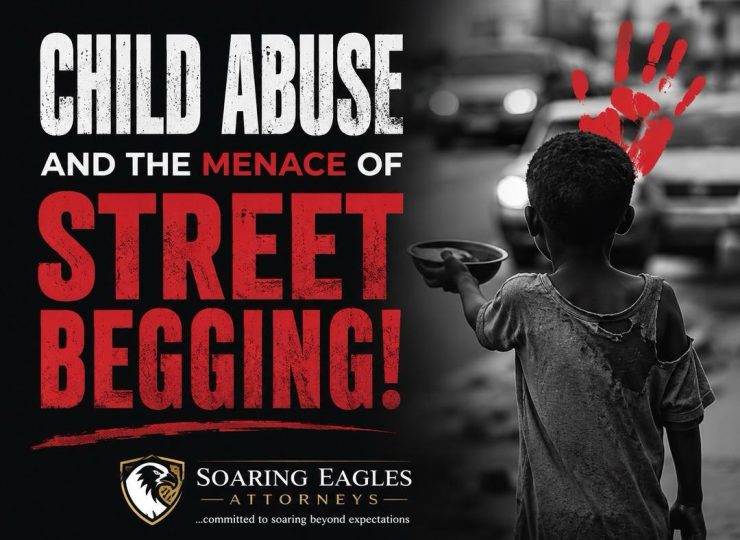
CHILD ABUSE AND THE MENACE OF STREET BEGGING!
The traffic light had barely turned red when I felt a tiny hand grab my shirt.
At first, I thought someone was trying to steal from me, so I turned sharply.
Alas! It was a little boy, not more than six years old. His clothes were torn at the shoulders with different sizes of slippers on his legs covered in dust, as if he had walked half of Lagos barefoot.
However, the look in his eyes carries serious disturbance and is also laced with tiredness.
“Oga please… food.”
Not money, food. Those were his words.
Behind him stood a smaller girl carrying a baby almost the size of her own body.
Cars blasted horns.
Street hawkers moved between vehicles.
Nobody looked surprised.
It was almost as if suffering had become part of the traffic.
I reached into my pocket, but something stopped me.
Not because I did not want to help.
But a question suddenly hit me harder than the afternoon sun.
Why do people bring children into a world they are not prepared for?
That question sounds harsh until a hungry child pulls your clothes at a traffic light.
We talk about freedom to have children, but rarely about responsibility.
Under the Child Rights Law of Lagos, every child has a legal right to survival, dignity, parental care, protection, education, and proper welfare among others.
Again, the law recognises child neglect, abandonment, and exposing children to harmful street conditions as serious violations.
Further to this, the Lagos State Government has repeatedly warned against using children for street begging and has described it as child abuse and a violation of the rights of the child.
In some cases, offenders have been arrested and sentenced to imprisonment.
But beyond punishment lies the bigger societal question.
Should bringing a child into suffering without care, shelter, food, education, or protection attract stronger legal consequences?
Poverty may explain neglect, but it does not erase the pain of the child living through it.
A child should not become a survival strategy.
A child should not grow up begging between moving cars.
A child should not have to tug at strangers for food while the law watches from a distance.
Perhaps the law must evolve beyond reacting to abuse after the damage is already done. Perhaps society must begin to ask uncomfortable questions about parental responsibility, state welfare systems, and the future we are creating for innocent children.
Every hungry child on the street is more than a sad sight, It is evidence of a system failing in broad daylight.
You can do well to share this article so it reaches the people who can influence and strengthen our laws for the protection of vulnerable children.
See you next time.
Soaring Eagles Attorneys